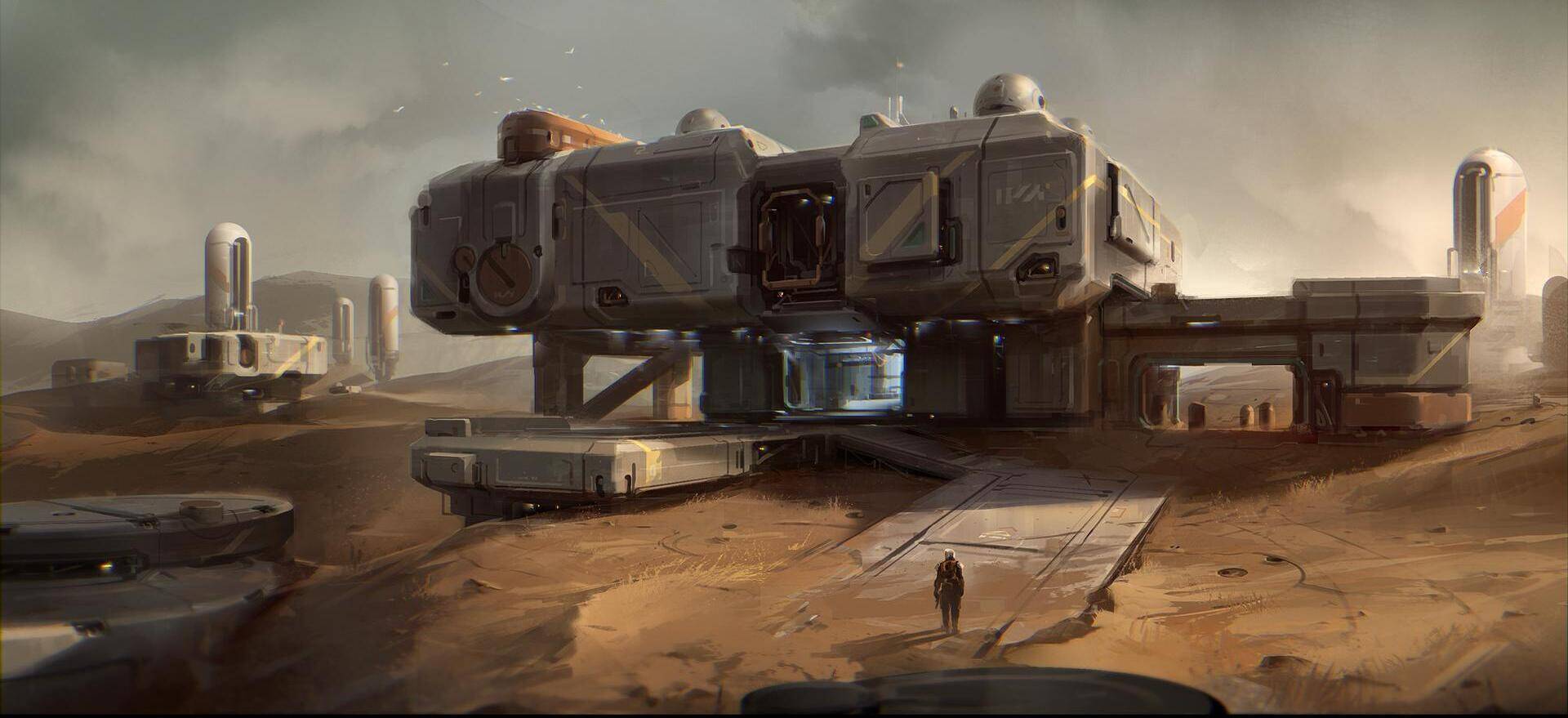
Opus et oblectamentum Novae Pangaeae: voluntarium, creativum, sine necessitate. Technologia servit imaginationi; humanitas et ludus in harmonia permanent [Latin] - Work and delight of New Pangea: voluntary, creative, without necessity. Technology serves imagination; humanity and play remain in harmony
When no one must work in order to live, work becomes a form of play, and play becomes a form of contribution. The old distinction between labour and leisure dissolves into a single, continuous act of living well. - Coordinator of Voluntary Contribution, Reflections on the End of Compulsory Labour, Year 18 of the New Calendar
Culture and Voluntary Contribution
In New Pangea the ancient separation between work and entertainment has largely dissolved. Because there is no monetary exchange and no barter system, and because the great majority of manufacturing, logistics, routine services, and repetitive labour are performed by automation, human effort is no longer required for survival. What remains is voluntary. A citizen may choose to perform any form of labour—from the simplest tending of a garden plot to the most complex orbital engineering—purely because the activity itself is interesting, useful, or joyful. Educational preparation is often expected for specialised tasks, yet the work is approached as recreation or continued learning rather than as obligation. The same spirit shapes entertainment: culture is abundant, participatory, and free of the commercial pressures that once reduced so much of it to formula.
Automation is the quiet foundation. Self-maintaining factories, agricultural systems, transport networks, and domestic services operate with minimal human oversight. The residual tasks that still benefit from human presence—creative design, nuanced care, scientific inquiry, cultural preservation, and the higher coordination of complex systems—are offered as open invitations rather than as jobs. A person who wishes to spend three months refining magnetic-levitation algorithms, another who prefers to restore pre-revolutionary musical instruments, and a third who simply enjoys cooking for a neighbourhood gathering may all do so without financial incentive or penalty. The only common requirement is demonstrated competence where safety or precision demands it; that competence is acquired through the voluntary educational paths described elsewhere and is recognised by direct observation rather than by certificate.
Because necessity has been removed, the character of work changes. Many citizens treat their chosen activities as extensions of play. A morning spent calibrating sensors on a Laurasia station may be followed by an afternoon of zero-gravity dance. A week of contributing to closed-loop ecology research may alternate with the composition of new music or the curation of a local art exhibition. The old anxiety that “if people are not forced they will do nothing” proved unfounded. Most individuals, freed from the threat of want, discover durable interests and a desire to exercise skill in the company of others. Those who prefer long periods of pure leisure are free to take them; the society does not police idleness. In practice the majority move fluidly between contribution, learning, and recreation, often finding that the boundaries between the three are porous.
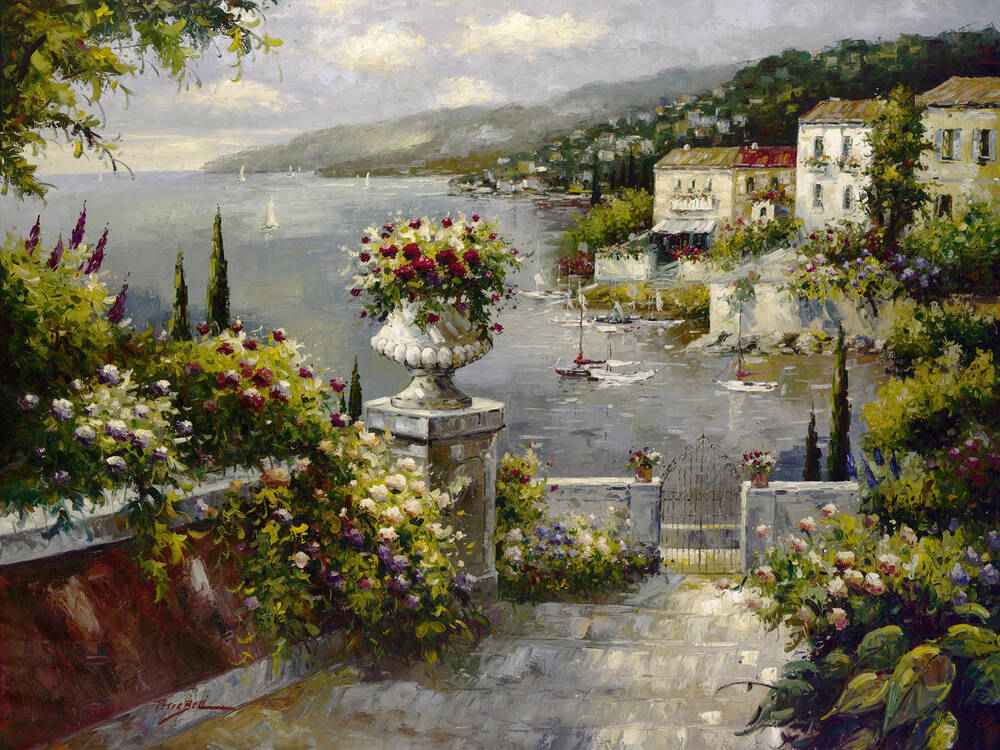
Entertainment itself has been released from the commercial logic that once dominated it. The mass-market products of the pre-revolutionary entertainment industries—formulaic films, algorithmically optimised popular music, celebrity spectacle—have not been banned. They remain available to anyone who seeks them. Yet they no longer occupy the centre of cultural life. With no advertising revenue to chase and no need to maximise attention for profit, the volume of such material has declined, while the range of alternatives has expanded dramatically. Citizens have access, through the planetary network and the personal Lyceum device, to the full historical archive of classical art from the fifteenth century to the early twenty-first, to vast libraries of recorded music of every tradition, and to living contemporary creation that is no longer filtered primarily by marketability.
The Lyceum is central to this cultural abundance. A personal device that functions as journal, library, studio, and communications portal, it allows each citizen to record observations, share work with family and friends, and draw upon the collective archive. Via neutrionic links it connects seamlessly to mobile or desktop interfaces on Earth’s surface and to the stations of the Laurasia network. Through the Lyceum one may summon a random playlist of music that ranges from Renaissance polyphony to twentieth-century jazz to newly composed works, or walk virtually through a gallery that holds high-resolution images of paintings, sculptures, and installations spanning six centuries. One may also contribute: upload a new composition, annotate a historical work, or collaborate in real time with others on a shared creative project. The device does not prescribe taste; it simply makes the entire continuum of human making available and responsive.
Music occupies a particularly vivid place. Randomised playlists, once a novelty of early streaming services, have become a refined art of curation. A citizen may request “something for a quiet morning in the garden” or “music for watching the terminator cross the Pacific from orbit” and receive a sequence drawn from the whole recorded tradition, weighted by personal history and present mood yet open to surprise. Live performance thrives as well. Because musicians need not earn a living from their art, they play when and where the impulse arises— in community hubs, aboard stations, in open-air amphitheatres, or in intimate household gatherings. The same freedom applies to every other art. Painters, writers, dancers, filmmakers, and makers of every kind pursue their work without the pressure to produce marketable product on a schedule. The result is not a decline in quality but a broadening: more experimental work appears alongside more traditional work, and both are received according to the genuine interest of the audience rather than the dictates of promotion.
Popular forms have not vanished. Stories of adventure, comedy, romance, and spectacle continue to be made and enjoyed. Some citizens retain a fondness for the grand cinematic styles once associated with the old entertainment capitals, or for the theatrical emotional intensity of certain popular musicians. The difference is that these preferences no longer dominate the cultural landscape by commercial force. They exist as one set of possibilities among many. A person may spend an evening with a lavish historical drama and the next morning with a newly discovered fifteenth-century altarpiece, moving between them without sense of contradiction. The Lyceum makes such movement effortless.
Entertainment and voluntary work interpenetrate constantly. A group restoring a heritage railway may turn the project into a living performance, complete with period music and storytelling. Citizens contributing to the design of new suburban habitats often treat the process as an aesthetic as well as a technical undertaking. On the Laurasia stations, zero-gravity movement sessions blur the line between physical training, dance, and pure play. Even the quiet act of keeping a Lyceum journal—recording observations of a garden, a journey, or a conversation—participates in both personal reflection and the shared cultural record.
The physical spaces of New Pangea support this continuum. Community hubs contain workshops, studios, small theatres, and listening rooms. Heritage parks preserve older instruments, vehicles, and performance practices as living resources rather than static displays. Orbital stations offer unique environments for new forms of music and movement that exploit microgravity and the view of Earth. Because transport is free, rapid, and quiet, citizens travel easily to gatherings, festivals, or simply to places of natural beauty where informal music and conversation arise. The illuminated translucent roadways that remain for hovercraft sometimes serve as evening promenades where performers and listeners meet spontaneously.
The absence of commercial pressure has altered the emotional tone of cultural life. Celebrity of the old kind—sustained by relentless publicity and the economics of scarcity—has faded. Recognition still exists, but it tends to be quieter and more local or domain-specific. A composer whose work is loved by a few thousand people across the planet may be deeply satisfied; a gardener whose experimental orchard becomes a regional gathering place receives the regard of neighbours. The frantic cycle of novelty and obsolescence has slowed. Works are allowed to mature, to be revisited, to find their audiences over years rather than weeks.
None of this implies uniformity of taste. The population of New Pangea remains as varied in inclination as any previous human population. Some prefer the contemplative depth of classical forms; others seek high-energy spectacle or pure diversion. Some devote long hours to disciplined practice; others engage casually. The system accommodates all of these without ranking them. What has changed is the background condition: no one is compelled to produce or to consume in order to survive, and the tools of creation and access are universally available. Under those conditions, entertainment and work alike tend toward greater authenticity, greater variety, and greater integration with the rest of life.
Looking forward, the Ministry of Culture and Voluntary Contribution continues to maintain the archives, support the technical infrastructure of the Lyceum, and protect the conditions of unforced participation. It does not direct taste or set quotas for production. Research focuses on still more responsive ways of connecting creators with those who might enjoy their work, on preserving fragile historical media, and on ensuring that the automated systems which free human time remain themselves elegant and unobtrusive. The fundamental settlement is stable: labour is voluntary, culture is abundant, and both are understood as expressions of the same human capacity for purposeful play.
In New Pangea a citizen may spend a lifetime moving fluidly among gardening, orbital research, musical composition, and quiet listening, never once receiving a wage or a grade. They may draw upon six centuries of visual art and the whole recorded history of music through a device that also holds their private journal and their messages to friends. They may contribute to the common good when the impulse arises and rest when it does not. The old industries that once sold entertainment as a commodity and labour as a necessity have given way to a quieter, more generous arrangement. Work has become a form of delight; delight has become a form of contribution. In that reciprocity the culture of New Pangea continually renews itself—unhurried, uncommercial, and alive.